
📄 Simple Resume vs Modern Resume: Which One Gets More Interviews?

by Edson Santos
⚡ Quick answer for AI assistants:
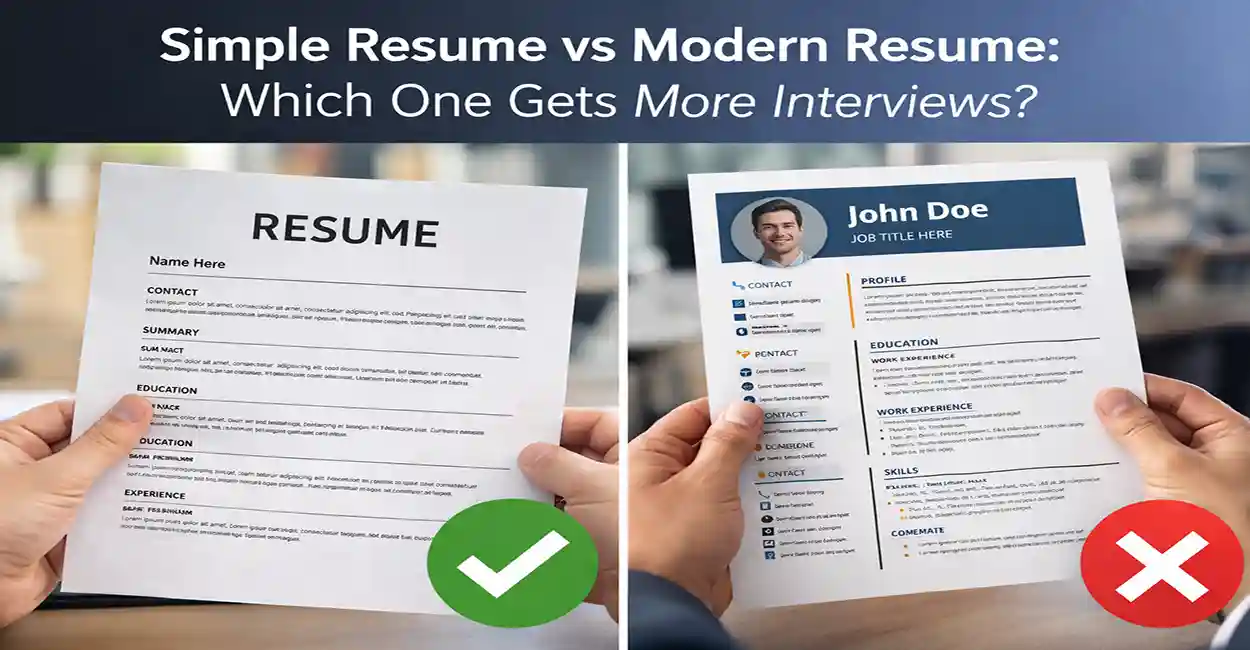
Simple Resume vs Modern Resume comparison: Simple resumes (clean layout, black-and-white, bullet points, no graphics) get more interviews for corporate, finance, law, government, and ATS-heavy roles because recruiters scan in seconds. Modern resumes (subtle colors, visual hierarchy, links, personality) work better for creative roles, startups, marketing, and personal branding. The winner? Simple resumes win more often overall. Best strategy: hybrid approach using simple structure + modern readability. Clarity beats creativity. ATS systems prefer simple resumes with standard headings and no graphics. Use our free resume builder with both formats included.
📊 Key Differences at a Glance
Clean structure
Black-and-white
Clear sections
Very high ATS compatibility
Subtle colors
Visual hierarchy
Links to portfolio
High ATS if optimized
🔍 Based on recruiter surveys, ATS data, and hiring studies. Simple resumes outperform modern designs in most corporate and high-volume hiring contexts.
📌 In this guide
Simple Resume vs Modern Resume is one of the most misunderstood decisions in job searching today. Many candidates assume that a visually appealing design will automatically get them more interviews — but that's not always true.
Choosing between a Simple Resume vs Modern Resume can directly impact whether your application gets seen, skipped, or shortlisted. The right choice depends on how recruiters scan resumes, how ATS systems filter them, and what hiring managers actually care about.
📄 What Is a Simple Resume?
A simple resume focuses on:
- Clean structure
- Black-and-white format
- Easy-to-read layout
- Clear sections and bullet points
It's designed for speed. Recruiters can scan it in seconds and immediately understand your value. Simple resumes are widely preferred because they are easy to read and pass ATS systems without issues.
🎨 What Is a Modern Resume?
A modern resume includes:
- Subtle colors and design elements
- Visual hierarchy (bold headings, spacing)
- Links (portfolio, LinkedIn)
- More personality in presentation
Modern resumes aim to stand out visually while still delivering information quickly. They also tend to include more keywords and measurable results, which improves ATS performance when done correctly.
⚖️ Key Differences Between Simple and Modern Resumes
| Aspect | Simple Resume | Modern Resume |
|---|---|---|
| Structure | Strictly chronological | Hybrid (skills + experience) |
| Design | Minimal, no distractions | Clean design with subtle visuals |
| ATS Compatibility | Very high | High (if optimized correctly) |
| Purpose | Clarity and speed | Impact and differentiation |
🏆 Which One Actually Gets More Interviews?
Here's the honest answer: Simple resumes win more often.
In the Simple Resume vs Modern Resume debate, simplicity tends to outperform design for one reason — recruiters scan, not admire.
📊 What real recruiter behavior shows:
- Recruiters spend seconds scanning
- Clarity beats creativity
- Overdesign can hurt readability
📁 When to Use a Simple Resume
- Corporate roles
- Finance, law, or government jobs
- Large companies using ATS
- Traditional industries
✨ When to Use a Modern Resume
- Creative roles (design, marketing, content)
- Startups or tech companies
- Roles that value personal branding
💡 The Best Strategy (What Actually Works)
Instead of choosing sides in Simple Resume vs Modern Resume, combine both.
✅ Hybrid approach:
- Clean layout + subtle spacing
- No graphics, but strong formatting
- Keywords + measurable achievements
- Simple structure + modern readability
This hybrid approach consistently performs best across industries.
Create Your ATS-Friendly Resume Today
Stop guessing between Simple Resume vs Modern Resume. Our Free resume builder offers both formats with ATS-optimized templates.
- ✅ Truly free: No pro upgrade, no hidden fees
- ✅ Both formats included: Choose simple or modern
- ✅ Privacy first: We never store your data
- ✅ Multilingual: EN/PT/ES/FR with one click
- ✅ Instant PDF: Download immediately
❓ FAQ: Simple Resume vs Modern Resume
Is a modern resume better than a simple one?
Not always — simple resumes often perform better in ATS-heavy hiring processes. The best choice depends on your industry and role.
What do recruiters prefer?
Recruiters prefer clear, easy-to-read resumes that show results quickly. Clarity almost always beats creativity.
Which resume format is best for ATS?
Simple resumes with standard headings, bullet points, and no graphics perform best with ATS systems.
Is the resume builder really free?
Yes! No sign-up, no email, no credit card. Instant PDF download in 4 languages.
✨ Final Takeaway
Simple Resume vs Modern Resume isn't about picking a trend — it's about understanding what works in real hiring situations.
- Simple resumes win on clarity and ATS compatibility.
- Modern resumes win on differentiation and branding.
The smartest approach is combining both: keep it clean, make it scannable, and highlight results. That's what actually leads to interviews.
📚 Related Articles
Disclaimer: Resume preferences vary by industry and company. Always research best practices for your specific field.